Case study 02 · Workforce compliance · Healthcare
Timecard compliance, from a single rate to a name.
Using data visibility to drive a 15% improvement in compliance.
compliance improvement within approximately one month of launch
The situation
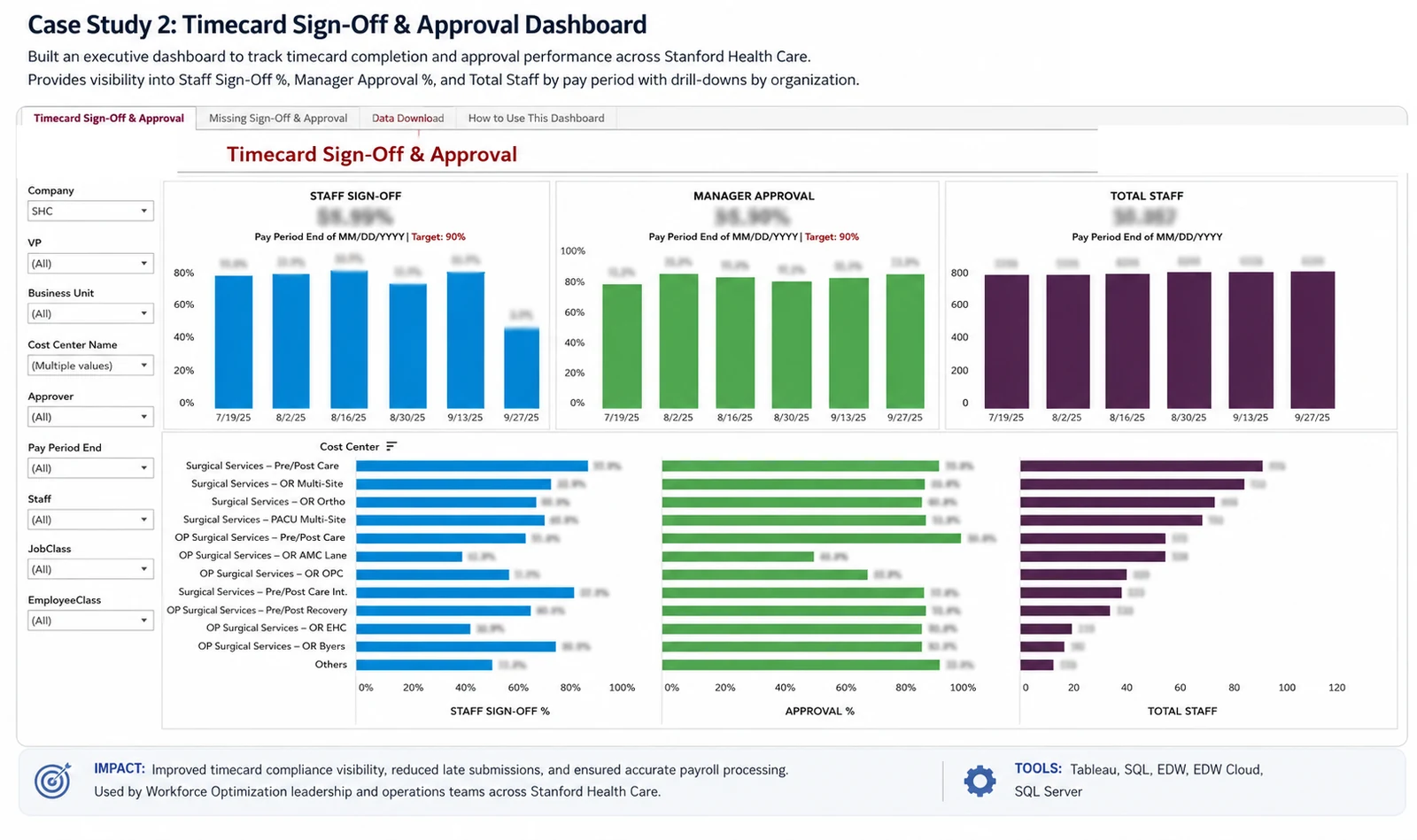
Leadership needed to know not only the overall timecard compliance rate, but exactly where problems were occurring. I built an end-to-end solution that allowed leaders to move from enterprise-level metrics down to departments, cost centers, managers, and individual employees. Within approximately one month of launch, timecard compliance increased by about 15%.
The problem
A single enterprise number told leaders compliance was a problem, but not whose problem it was. There was no visibility into which departments and cost centres were non-compliant, and no way to see which individual employees had not signed their timecards or which managers had not approved them.
My role
Sole owner. Requirements, data sourcing, migration, modelling, build, validation, deployment, and ongoing support.
What I did
Ten steps · one owner
Compliance requirements
Worked with business stakeholders to understand what the organisation actually required.
Data sourcing
Identified the appropriate timecard data and the systems it lived in.
Legacy migration
Worked through the migration of legacy timecard data into EDW Cloud.
Reporting logic
Developed the SQL and reporting logic behind the key metrics.
Legacy vs. cloud testing
Performed extensive testing between the legacy and cloud data.
Validation
Validated results at employee, manager, department, and cost-centre level.
Dashboard build
Built the Tableau dashboard.
KPI definition
Created the headline KPIs: Staff Sign-Off %, Manager Approval %, and Total Staff.
Drill-down
Enabled drill-down so leaders could isolate issues by organisational area, manager, and employee.
Deploy & support
Tested, reviewed, deployed, and supported the dashboard after launch.
Hardest part
Migrating the legacy timecard data into EDW Cloud and testing it thoroughly. Accuracy mattered more than usual here, because the dashboard was being used to identify individual employee and manager compliance.
Result
Timecard compliance rose roughly 15% within the first month of launch. The dashboard is used across departments, giving leaders visibility from the enterprise level down to departments, cost centres, managers, and individual employees, so they can see where sign-offs or approvals are missing and act on it.